Why Trauma Makes You Attracted to the Wrong People: The Neuroscience Behind Unhealthy Relationship Patterns

When the Wrong People Feel “Right”
You meet someone, feel an intense spark, the chemistry is undeniable — but soon the familiar pattern unfolds: inconsistency, confusion, emotional ups and downs. Part of you knows this isn’t healthy, yet you feel deeply drawn in.
Or, on the other hand, you meet someone kind, reliable, warm… and feel nothing.
This isn’t irrational.This is neurobiology, attachment history, and trauma patterns playing out in real time.And most importantly:Feeling attracted to the “wrong people” is not a personal failure — it’s a learned nervous system response.
Let’s unpack why this happens and how you can begin shifting the pattern.
What’s Really Happening in Your Nervous System
Your Body Seeks What’s Familiar – Not What’s Healthy
Your nervous system is wired for familiarity.If your early environment contained:
emotional unpredictability
lack of safety
hot-cold dynamics
chaos or inconsistency
emotional neglect
…your body will later interpret those same signals as “home.”
According to Polyvagal Theory, the nervous system stores early relational experiences as templates for connection.If chaos equals connection in childhood, chaos may equal attraction in adulthood.
Your Brain Associates Intensity with Connection
Trauma teaches your body that relationships feel like:
unpredictability
longing
hypervigilance
emotional work
waiting for love
So when someone calm, consistent, and safe shows up, your system doesn’t recognize it as “love” — it registers it as unfamiliar.And unfamiliar feels unsafe.
Why We Confuse Familiar Chaos with “Love”
The Dopamine–Cortisol Rollercoaster
Unpredictable partners create a highly addictive biochemical cycle:
Dopamine spikes when they give attention
Cortisol rises when they pull away
The relief when they come back feels like “chemistry”
This pattern — known as intermittent reinforcement — is one of the strongest learning mechanisms in the human brain.
This isn’t emotional weakness.It’s a survival response.
Intensity Feels Like Importance
When your nervous system has survived relational stress, high activation feels “normal.”So stable love can feel boring, flat, or “not enough,” while inconsistency feels exciting.
Your body isn’t looking for love.It’s scanning for what it knows.

The Role of Childhood Trauma & Attachment Patterns
Attachment Trauma Becomes Your Internal Compass
If you grew up with insecure attachment or emotional unpredictability, your body learned:
connection is earned, not given
love requires self-abandonment
closeness feels dangerous
inconsistency = normal
These early patterns become unconscious filters for partner choice.
Implicit Memory Drives Attraction
Even without explicit memories, your nervous system stores sensations, emotional rhythms, and survival strategies.
This is why someone emotionally unavailable might feel oddly familiar — they resemble the early emotional landscape your body survived.
A Common Example
“Alex” grew up with a parent who was loving one day and withdrawn the next.As an adult, Alex feels deeply attracted to partners who are inconsistent — not because it’s healthy, but because it mirrors what “love” used to feel like.
Trauma Bonding: When Pain Feels Like Home
Why It’s Hard to Let Go
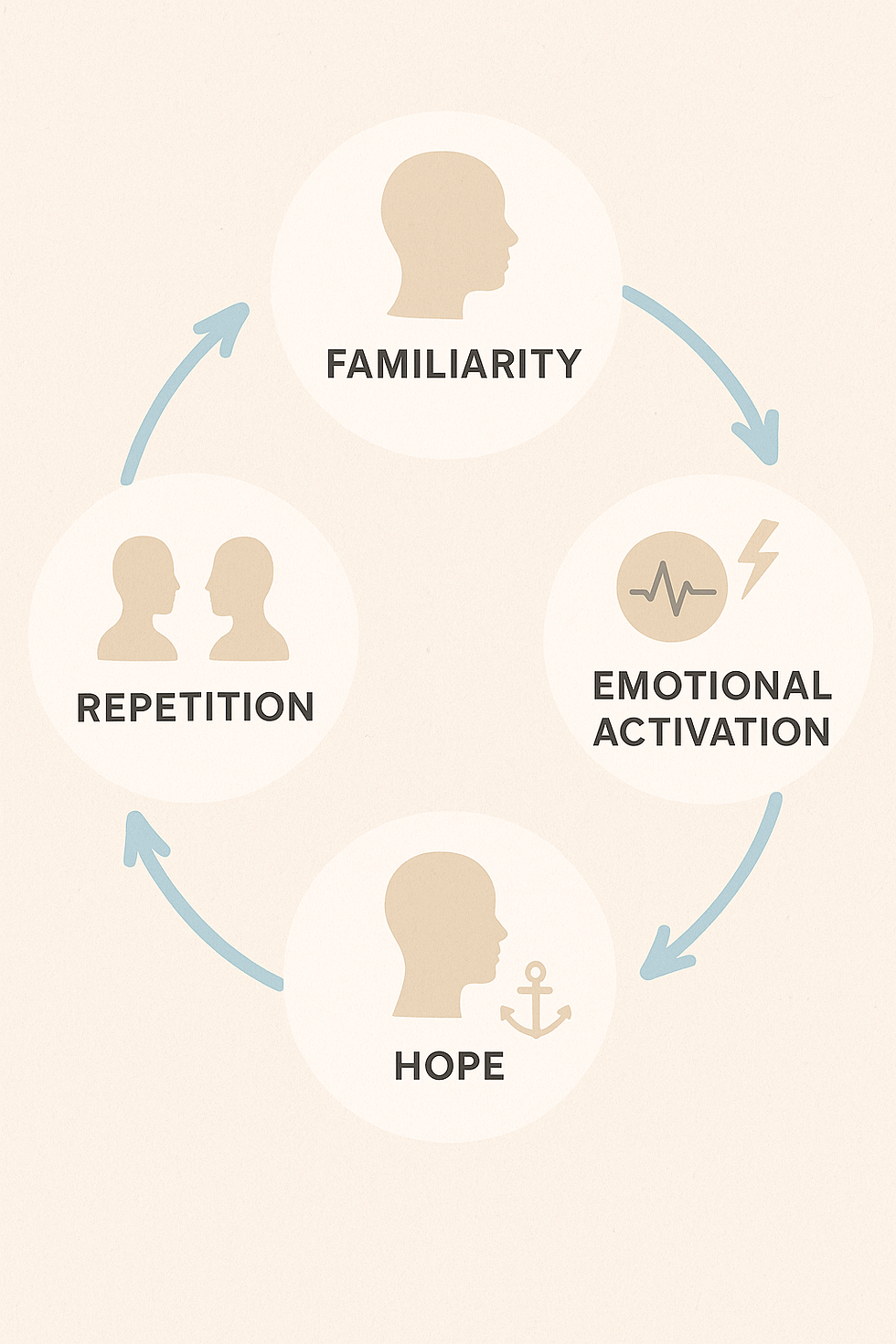
A trauma bond forms when periods of affection alternate with periods of stress, creating a cycle of:
longing
hope
fear
relief
renewed attachment
The more unpredictable the relationship, the stronger the emotional glue becomes.
This doesn’t mean you’re addicted to drama.It means your nervous system is trying to resolve an old wound by recreating it.
Signs of a Trauma Bond
deep attachment despite harm
thinking about them constantly
difficulty leaving even when miserable
idealizing small moments of kindness
blaming yourself for their behavior
This is not a failure of willpower — it is a physiological imprint.
Why Healthy People Feel “Boring”
Safety Is Often Unfamiliar
When you’re used to intensity, people who are emotionally available may feel:
too calm
too predictable
not stimulating enough
“off” somehow
But this “lack of intensity” is not a red flag.It is often a sign of emotional health.
Your Nervous System Needs Time to Adjust
It takes regulation, patience, and new experiences of safety for your body to register healthy connection as meaningful, enjoyable, even exciting.
How to Break the Cycle
1. Awareness — Name the Pattern
Ask yourself:
Do I mistake intensity for compatibility?
Do I chase people who are distant or inconsistent?
Do stable people feel boring or “not my type”?
Naming the pattern reduces its power.
2. Regulate the Nervous System
Since trauma and relationships are deeply embodied, healing must also involve the body.
Supportive approaches include:
trauma-informed therapy
somatic work
TRE, SE, breathwork
grounding practices
co-regulation experiences
A regulated nervous system chooses differently.
3. Create New Relational Experiences
Healthy patterns grow through repeated experiences of:
safety
consistency
emotional availability
clear boundaries
being heard and valued
These experiences literally rewire attachment pathways.

Somatic Exercises to Reorient Your Attraction System
1. Grounding Through Orientation
Look around the room.
Slowly identify 3 things you see.
Take a calm breath out.
Feel your feet on the ground.
Notice 3 sounds around you.
This helps shift your system from survival to presence.
2. Hand-on-Heart Regulation
Place one hand on your heart
One hand on your lower abdomen
Breathe slowly, long exhale
Say internally: “I am safe in this moment.”
This calms the vagus nerve and reduces trauma-driven attraction patterns.
3. “Inner Yes / Inner No” Practice
Ask your body:Does this feel safe? Does this feel calming?Notice sensations: tightening, warmth, expansion, pressure.
This strengthens your somatic boundary system.
Conclusion: You’re Not Broken — Your Nervous System Is Protecting You
If you’re repeatedly attracted to the wrong people, it doesn’t mean you’re flawed, unlovable, or incapable of healthy connection.
It means your body learned patterns that helped you survive — and it is time to update them.
With regulation, awareness, new experiences, and support, your nervous system can learn that:
safety is exciting,
stability is attractive,
and healthy love is possible.


Comments